Hands That Hold History: The Artisans Devoted to the Fox Theatre's Living Legacy
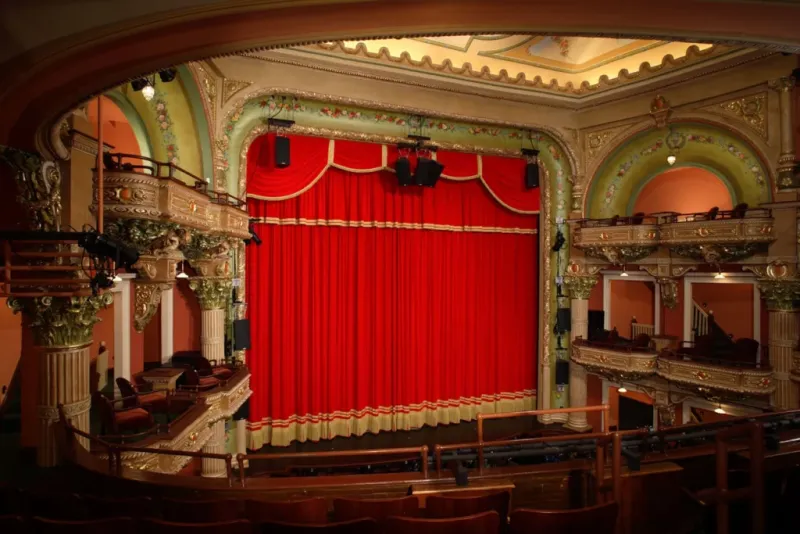
Photo: theatre craftsman restoring ornate plasterwork historic building interior, via johncanningco.com
There is a particular kind of devotion required to care for a building that belongs, in spirit, to an entire city. The Fox Theatre on Woodward Avenue has stood as a testament to Detroit's cultural ambition since 1928, and for nearly a century, its grandeur has been sustained not by accident but by the deliberate, painstaking labor of skilled individuals who treat craftsmanship as a vocation rather than merely a job. These are the men and women behind the velvet curtain — the artisans, technicians, and preservation specialists whose contributions rarely earn a curtain call but without whom the curtain would never rise.
The Plasterwork Guardians
Step inside the Fox Theatre's grand lobby, and the eye is immediately overwhelmed — in the most magnificent way possible — by an explosion of ornate plasterwork. Intricate cornices, hand-sculpted friezes, and gilded reliefs stretch across every surface, each element a product of an artistic tradition that predates modern construction methods by centuries. Maintaining this legacy falls to a small, specialized team of plasterers and conservators who understand that their work is not renovation in the conventional sense. It is, more precisely, an act of historical dialogue.
When a section of decorative plaster requires attention, these craftspeople do not simply patch and paint. They study the original molds, consult archival photographs, and in many cases fabricate new forms using techniques that mirror those employed by the theatre's founding artisans. The materials themselves are carefully sourced to ensure compatibility with the existing substrate, preventing the kind of structural discord that can accelerate deterioration. It is slow, exacting work — and it is exactly the kind of work that allows the Fox to present itself today with the same theatrical authority it commanded in the age of vaudeville.
Electricians as Historians
The Fox Theatre's lighting systems occupy a fascinating intersection between historical preservation and modern theatrical technology. On one hand, the building's original architectural lighting — the amber sconces, the ornate chandeliers, the carefully orchestrated illumination of the auditorium ceiling — must be maintained in a manner consistent with the theatre's landmark status. On the other hand, the demands of contemporary touring productions require state-of-the-art rigging, digital lighting boards, and sophisticated control infrastructure that would have seemed like science fiction to the Fox's original designers.
The electricians and lighting technicians who navigate this tension are, in a very real sense, historians with tool belts. They must understand not only the mechanics of modern theatrical lighting but also the aesthetic intentions embedded in the building's original design. When a production calls for dramatic stage lighting that might wash out the auditorium's architectural details, these professionals work collaboratively with touring production crews to find solutions that honor both the performance and the space. The Fox is not merely a venue; it is a co-performer, and its lighting team understands that distinction implicitly.
The Riggers Above the Stage
High above the stage, invisible to every patron below, a network of fly systems, counterweights, and rigging infrastructure makes possible the scenic transformations that define modern theatrical spectacle. The stagehands and riggers who operate this machinery — many of them members of the International Alliance of Theatrical Stage Employees — bring decades of collective expertise to each production load-in. Their knowledge of the Fox's particular stage architecture, including its specific rigging points, weight tolerances, and sightline considerations, is institutional knowledge that cannot be replicated by a touring crew encountering the space for the first time.
This expertise becomes especially critical when large-scale Broadway productions arrive with complex scenic packages. The collaboration between the Fox's in-house stage crew and visiting production teams is a carefully choreographed negotiation, one that requires mutual respect and a shared commitment to safety. The result, night after night, is seamless — which is precisely the point. When the scenic elements descend and the audience gasps, no one is thinking about the riggers above. That invisibility is the highest professional compliment.
Textile and Upholstery Conservation
Few elements of the Fox Theatre's interior communicate opulence quite so immediately as its soft furnishings — the rich draperies, the upholstered seating, the decorative fabric panels that line the auditorium walls. These textiles are not merely decorative; they are acoustically functional, contributing to the warm, resonant sound quality that performers and audiences alike have long praised. Maintaining them requires the services of textile conservators who understand both the aesthetic and the acoustic dimensions of their work.
Fabric restoration at this level is a discipline unto itself. When draperies fade or seating upholstery shows wear, the conservators responsible for addressing these issues must source materials that match the originals in color, weight, and weave structure. Substituting a modern synthetic where a period-appropriate wool was originally used, for instance, could subtly alter the room's acoustic character — an outcome no one associated with the Fox Theatre would find acceptable. The attention to this level of detail is a measure of the institution's broader commitment to authenticity.
The Invisible Architecture of Sound
Acoustics at the Fox Theatre represent another domain where specialist expertise proves indispensable. The building's original designers understood intuitively — if not yet scientifically — how to shape a room for optimal sound projection. The curved surfaces, the layered ornamentation, the specific dimensions of the auditorium all contribute to an acoustic environment that remains remarkable by contemporary standards. Audio engineers who work regularly at the Fox develop a nuanced understanding of how sound behaves in this particular space, knowledge they apply when mixing live performances to ensure that every seat in the house receives the production's full sonic impact.
For touring productions that arrive with their own audio teams, the Fox's in-house engineers serve as essential guides, translating the building's acoustic personality into practical terms that allow visiting crews to calibrate their systems quickly and effectively. This collaborative expertise ensures that the theatre's natural acoustic qualities are treated as assets rather than obstacles.
A Community of Custodians
What unites these diverse specialists — the plasterers and electricians, the riggers and textile conservators, the audio engineers and stage managers — is a shared sense of custodianship. They do not merely work at the Fox Theatre; they are stewards of it. Their labor represents a continuous act of civic commitment, a recognition that the building they tend belongs not only to its owners or its current patrons but to the broader Detroit community and to the generations who will inherit it.
In a city whose history is inseparable from the stories of its workers, there is something deeply appropriate about the fact that the Fox Theatre's magnificence is sustained by skilled hands and expert minds. Detroit has always been a city that makes things — and the craftspeople who keep the Fox Theatre alive are, in the truest sense, making something extraordinary every single day. Their work may not earn applause, but it is the foundation upon which every standing ovation ultimately rests.