Curtain Calls and Quiet Miracles: The Untold Stories Behind the Fox Theatre's Most Legendary Nights

Photo by Photo by v2osk on Unsplash on Unsplash
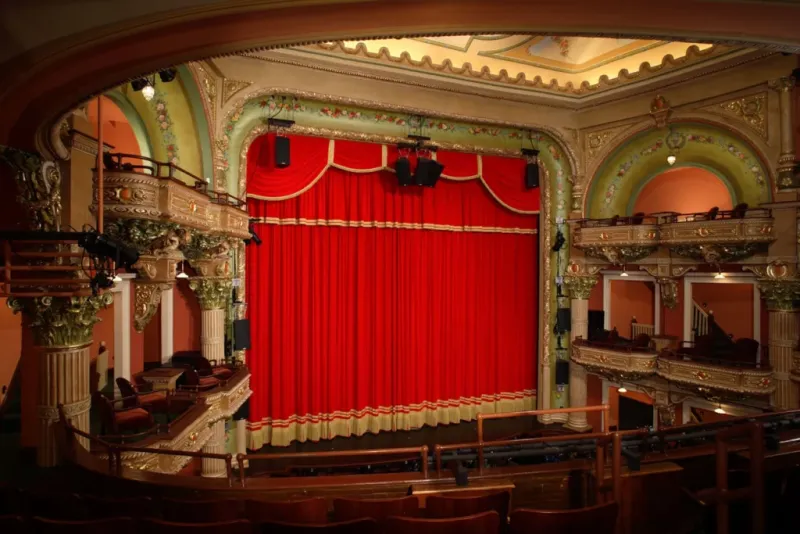
There is a particular quality of silence that settles over the Fox Theatre in the moments before a performance begins. The house lights dim across nearly 5,000 seats. The ornate gilded columns catch the last traces of amber light. And somewhere in that hush, a collective anticipation rises — one that has been building, in various forms, since the theatre first opened its doors in 1928. For those who have stood on that stage, that silence is something they never forget.
"You feel the room before you see it," recalls one veteran stage director who has helmed multiple productions at the Fox over the past two decades. "There's a weight to the space — not oppressive, but meaningful. You understand immediately that you are somewhere that has held extraordinary things."
The Fox Theatre has indeed held extraordinary things. From touring Broadway productions to landmark musical performances, the venue's history is threaded with moments that reshaped how Detroiters understood what live performance could be. Some of those moments are well documented. Others exist primarily in the memories of the people who were present — the performers who overcame private crises to deliver transcendent shows, the directors who made last-minute decisions that altered the course of an entire run, and the audience members who arrived expecting entertainment and left changed.
When the Stage Demanded Everything
Among the most frequently cited performances in the Fox's modern history are those that required their casts to summon something beyond technical proficiency. Several longtime patrons recall a touring production of a major Broadway musical in which a lead performer, battling illness severe enough to warrant a replacement, chose to continue. What followed, by multiple accounts, was a performance of unusual emotional depth — one in which physical limitation appeared to strip away artifice entirely.
"You could feel that she was fighting for every note," says a Detroit-area theatergoer who has attended performances at the Fox for more than thirty years. "But somehow that made it more real. The character she was playing was also fighting. The Fox has a way of amplifying those moments — the architecture holds emotion the way a cathedral holds sound."
That architectural dimension is not incidental. The Fox's interior — a layered tapestry of carved plasterwork, hand-painted murals, and ornamental detail drawn from South and East Asian artistic traditions — creates an environment that performers consistently describe as transformative. Unlike the neutral black-box aesthetic of many contemporary venues, the Fox asserts its own presence. It participates in every production staged within it.
The Directors Who Learned to Listen to the Room
For directors, working within the Fox Theatre presents a unique creative negotiation. The space has its own demands, its own rhythms, and its own history — and the most accomplished theatrical minds who have worked there speak of learning to collaborate with the building itself.
One director, who oversaw a critically praised run of a dramatic theatrical piece at the Fox, described the experience of technical rehearsals as a process of discovery rather than implementation. "We had staged the show in other houses before Detroit," she explained. "But when we got into the Fox, certain blocking choices that had worked elsewhere felt wrong. The sightlines, the acoustics, the sheer vertical scale of the room — they pushed us toward something more expansive. We restructured two scenes on the fly."
Those restructured scenes, she notes, became the moments most frequently cited by reviewers and audience members alike. The Fox, it seemed, had known something the production team had not yet understood.
Voices from the Audience
The history of any great theatre is ultimately inseparable from the people who have filled its seats. At the Fox, that audience has always been as diverse as Detroit itself — families attending their first Broadway touring production, seasoned arts patrons measuring each new performance against decades of accumulated memory, young people encountering the particular electricity of live theatre for the first time.
Among the most affecting testimonies gathered in conversations with longtime Fox patrons is that of a retired Detroit schoolteacher who attended a performance at the Fox as a child in the 1970s and has returned regularly ever since. "My mother brought me when I was eight years old," she recalls. "I had never seen anything like that building. I didn't understand everything about the show, but I understood that I was somewhere important. That feeling has never left me."
Her account is representative of a broader pattern. Time and again, individuals who encountered the Fox Theatre at formative moments in their lives describe not merely remembering specific performances, but carrying the experience of the space itself — its grandeur, its warmth, its implicit promise that what happens here matters.
Triumph in the Wings
Behind the velvet curtain, the Fox Theatre's backstage has been the site of its own quiet dramas. Stagehands who have worked the venue for decades speak of the logistical complexity involved in hosting large-scale touring productions — the intricate coordination required to transform a stage designed in one era to accommodate the technical demands of contemporary theatrical spectacle.
"People see the finished product," notes one longtime crew member who has worked at the Fox for over twenty years. "They don't see the twelve-hour load-ins, the last-minute rigging adjustments, the problem-solving that happens in real time. Every show is a small miracle of collaboration."
That collaborative spirit extends to the relationship between visiting companies and the Fox's permanent staff. Multiple touring production managers have noted that the Fox crew's institutional knowledge — their intimate familiarity with the building's idiosyncrasies, its loading dock geometry, its electrical infrastructure — makes the difference between a technically sound performance and a genuinely exceptional one.
The Legacy That Continues to Be Written
What distinguishes the Fox Theatre's performance history from that of a mere entertainment venue is the cumulative weight of meaning that has accumulated across nearly a century of use. Each production adds a layer to a living archive — one that exists not in any single document or database, but in the collective memory of a city.
Detroit has always been a place that understands the relationship between labor and beauty, between struggle and artistry. The Fox Theatre, which survived decades of urban hardship before its landmark restoration in 1988, embodies that understanding in its very walls. When performers take that stage, they do so in the company of everyone who has stood there before them.
"You carry the history whether you know it or not," says the director who restructured her production during technical rehearsals. "The Fox asks you to be worthy of it. And in my experience, that's when the most extraordinary things happen."
The curtain will rise again, as it always has. And somewhere in the house, in one of those nearly 5,000 seats, another memory is waiting to be made.