Where Love Finds Its Cue: The Fox Theatre's Quiet Role in Detroit's Most Enduring Romances
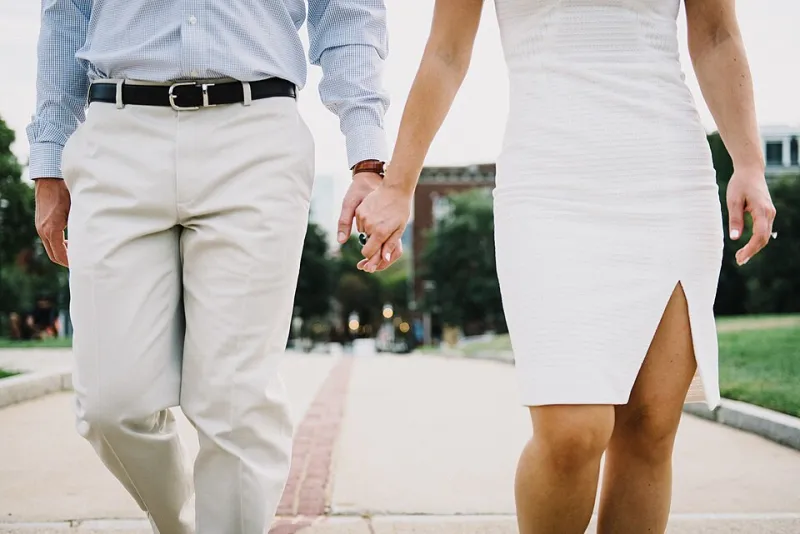
Photo: Alice Donovan Rouse (@alicekat), CC0, via Wikimedia Commons
There is a moment, familiar to anyone who has sat inside the Fox Theatre, when the house lights dim and the audience collectively exhales. In that suspended breath — that shared pause between the ordinary world and whatever is about to unfold on stage — something quietly remarkable sometimes happens between strangers. They lean slightly toward one another. A glance is exchanged. A program is shared. And occasionally, without any intention at all, the evening becomes something far more significant than a night at the theatre.
Over the course of nearly a century, the Fox Theatre has accumulated a history measured not only in performances and standing ovations, but in the quieter, more private milestones of the people who have passed through its doors. Among those milestones, few are as unexpected — or as enduring — as the love stories that have found their beginning, and sometimes their renewal, within these walls.
A Setting Designed for Feeling
It would be difficult to design a more naturally romantic environment than the Fox Theatre. The building's Siamese-Byzantine interior — with its soaring archways, intricate plasterwork, and warm amber lighting — was conceived in an era when theatres were intended to transport their audiences entirely. William Kapp's 1928 design was meant to overwhelm the senses gently, to make the everyday feel distant and the extraordinary feel near. That architectural intention, it turns out, has had consequences its designers likely never anticipated.
"There's something about being in a space that beautiful that makes people more open," says one longtime Fox Theatre usher who has worked the main floor for more than two decades. "You come in carrying whatever the week handed you, and then you look up at that ceiling, and something shifts. People are just — softer, somehow. More present."
That softness, that heightened emotional availability, has proven to be fertile ground for human connection.
First Meetings in the Grand Lobby
Among the staff members and longtime patrons interviewed for this piece, the lobby emerges repeatedly as the theatre's most unlikely matchmaking space. It is a room designed for spectacle — for the parade of arriving guests, for the ceremony of a night out — and yet it is also a room where conversations begin with surprising ease.
Marcel and Diane, who have attended Fox Theatre productions together for thirty-one years, trace the beginning of their relationship to a production in the late 1980s. They had each arrived alone, both accompanying friends who had canceled at the last moment. They ended up seated beside one another, struck up a conversation during intermission over the shared experience of having almost stayed home, and exchanged telephone numbers before the final curtain. They were married four years later.
"We always say the Fox introduced us," Diane reflects. "It sounds like something from a movie, but it's just what happened. The theatre put us in the same room at the same moment, and the rest followed."
Their story is not singular. Among regular patrons, variations on this account surface with a consistency that suggests something more than coincidence.
The Language of Shared Experience
What makes the Fox Theatre an effective, if accidental, setting for romantic connection may have less to do with its décor than with what takes place inside it. Live performance — whether opera, Broadway, classical music, or comedy — creates a shared emotional experience among strangers. Audiences laugh together, fall silent together, and are moved together. That synchronization of feeling, researchers have noted, is one of the more reliable pathways to social bonding.
For couples who have attended the Fox Theatre through different chapters of their relationship, this quality of shared experience takes on additional meaning. Several patrons described returning to the theatre during difficult periods in their marriages and finding, in the act of sitting together in the dark and feeling something simultaneously, a kind of wordless reconnection.
"We went through a rough stretch about ten years in," says one patron who asked to be identified only by his first name, Thomas. "My wife suggested we go see a show at the Fox — she said we needed to do something we used to love doing. We sat there and watched the whole performance without saying much. But afterward, walking out under the marquee, something had shifted between us. I can't explain it exactly. The theatre did something we hadn't been able to do on our own."
Proposals Beneath the Marquee
The Fox Theatre's marquee has served as the backdrop for a notable number of marriage proposals over the years. Theatre staff members recall instances of patrons coordinating with the house in advance, arranging for a particular message to be displayed, or simply choosing the moment of departure — when the marquee's glow falls across the sidewalk and the emotion of the evening is still present — to ask the question they had been carrying all night.
"We've had people come back to tell us," says one member of the Fox Theatre's guest services team. "They'll mention it in passing — 'This is where he proposed' or 'We got engaged right out front.' It happens more than you'd think. There's something about ending a beautiful evening in a beautiful place that makes people want to mark it somehow."
The theatre itself does not maintain a formal registry of such moments, which perhaps makes them more authentic. These are private histories, accumulated quietly, belonging entirely to the people who made them.
An Institution That Holds More Than History
The Fox Theatre's significance to Detroit is often discussed in terms of its architectural grandeur, its cultural programming, or its role in the revitalization of the Woodward corridor. These are legitimate and important dimensions of the theatre's legacy. But they represent only the public record.
The private record — the one held in the memories of the couples who met here, fell in love here, repaired something fragile here — is equally real, and in its way equally enduring. The Fox Theatre has never advertised itself as a place for romance. It has simply been, for nearly a century, a place where people come to feel something. And feeling something, it turns out, is often where love begins.
For the patrons who carry these stories, the theatre is not merely a venue they visit. It is a place that belongs to them in a particular, irreplaceable way — a place that witnessed something they have never forgotten and that holds, within its gilded and storied walls, a piece of their own history.
In that sense, the Fox Theatre has always been doing something more than presenting performances. It has been holding space for the full range of human experience — including, quietly and without ceremony, the experience of falling in love.