Rituals, Reverence, and Recognition: What a Century of Fox Theatre Audiences Says About Detroit
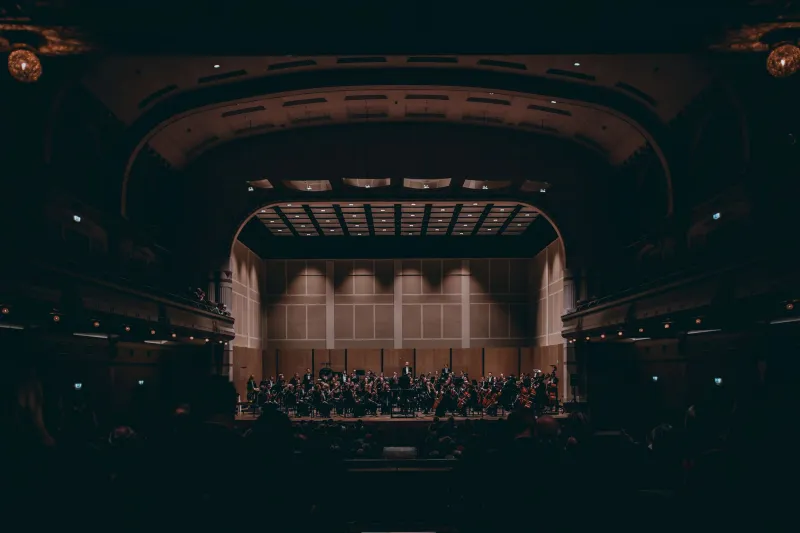
There is no written rulebook distributed at the door of the Fox Theatre. No laminated card tucked into a program explains the correct moment to rise from your seat, or how to properly acknowledge a performer who has rendered a house of 5,000 people momentarily speechless. And yet, walk through those ornate bronze doors on any given evening, and you will find a crowd that behaves with a remarkable degree of shared understanding — a quiet consensus forged not by policy, but by decades of collective experience.
This unwritten code, accumulated across generations of Detroit families, tells a story that no architectural survey or box office record can fully capture. It is the story of who Detroiters are when they choose, together, to be their best selves.
Dressed for the Occasion, Defined by the Effort
Ask any long-tenured usher at the Fox Theatre what has changed most visibly over the decades, and the answer is rarely the productions or the sound system. It is the clothing.
"In the early years, people treated a night at the Fox like a formal affair," recalls one usher who has worked the main floor for more than three decades. "Men came in suits. Women wore gloves. There was an understanding that the building deserved a certain presentation in return."
The shift away from strict formal attire, which began gradually in the 1970s and accelerated through subsequent decades, might appear to signal a loosening of standards. But longtime staff and frequent attendees offer a more nuanced interpretation. What replaced the rigid dress code was not indifference — it was personalization. Today's Fox Theatre audience arrives in everything from tailored blazers to concert T-shirts, yet the underlying impulse remains constant: people make an effort. They acknowledge, through their appearance, that this place is different from an ordinary evening out.
For many Detroit families, selecting an outfit for the Fox Theatre remains a ritual passed from parent to child. "My grandmother used to say that you dressed for the Fox the way you dressed for church," says one regular attendee who has held season tickets for nearly twenty years. "You were showing up for something larger than yourself."
The Language of Applause
Detroit audiences have developed a particularly expressive relationship with applause — one that veteran performers and touring production managers frequently remark upon. The Fox Theatre crowd does not applaud uniformly. It listens, measures, and then responds with a precision that communicates far more than simple approval.
A technically accomplished but emotionally distant performance earns polite, measured recognition. A moment of genuine vulnerability or virtuosity — the kind that stops thought entirely — produces something different: a beat of absolute silence before the room erupts. That pause, brief as a held breath, is perhaps the most eloquent thing a Detroit audience does. It is the sound of a city paying attention.
Standing ovations at the Fox Theatre carry particular weight because they are not automatic. Touring companies accustomed to reflexive standing in other markets have noted, with both surprise and respect, that Detroit's audiences reserve the gesture. When the Fox crowd rises, it means something was earned.
"You can feel the difference," one production stage manager noted following a run at the theatre. "The standing ovation here doesn't feel like a social obligation. It feels like a verdict."
Inter-Generational Rituals and the Transfer of Belonging
Perhaps no behavioral pattern at the Fox Theatre speaks more directly to Detroit's cultural values than the deliberate transmission of the theatre experience from one generation to the next. Interviews with frequent attendees reveal a strikingly consistent tradition: the first visit to the Fox is almost always accompanied by a parent, grandparent, aunt, or uncle who treats the occasion as a formal introduction.
This is not accidental. Detroit is a city with a deep investment in legacy — in the idea that what has been built and endured deserves to be honored and passed forward. The Fox Theatre, having survived economic collapse, physical deterioration, and its own near-demolition before the landmark restoration of the 1980s, embodies that ethos more visibly than almost any other institution in the city.
For many families, bringing a child to the Fox Theatre for the first time carries ceremonial weight. There are accounts of grandparents who saved specifically for the occasion, who rehearsed with grandchildren how to find their seats and when to be quiet. The theatre becomes, in these moments, a site of civic initiation — a place where belonging to Detroit is confirmed and handed down.
"My father brought me here when I was seven," says one patron who now brings her own children regularly. "He told me that this building had been here through everything Detroit had been through, and that it was still standing. I didn't fully understand what he meant then. I do now."
Conduct as Community
The unspoken behavioral norms of the Fox Theatre extend beyond dress and applause into the subtler registers of communal conduct. The way audiences navigate crowded lobbies during intermission — with a patience and consideration that feels slightly elevated above the ordinary — reflects an implicit agreement that the theatre is shared space deserving shared respect.
Long-time ushers describe a crowd that is largely self-regulating. Latecomers instinctively minimize disruption. Audience members who speak too loudly during a performance are more often quieted by a glance from a neighbor than by any official intervention. Even the post-show exodus from the parking structures carries a particular civility — a willingness to yield, to wait, that differs noticeably from other large-venue events in the city.
Management at the Fox Theatre attributes much of this to the physical environment itself. There is substantial evidence in behavioral research that ornate, carefully preserved spaces prompt people to elevate their own conduct — that beauty, in a sense, is instructional. The Fox Theatre's Siamese-Hindu architectural grandeur, its hand-restored gilded surfaces and painted ceilings, communicate a standard without uttering a word.
"The building does a great deal of the work," one senior staff member notes. "When people walk in and see what has been preserved for them, they understand instinctively that they are custodians of something for the evening."
A Mirror as Much as a Stage
What the behavioral history of the Fox Theatre's audiences ultimately reveals is that the relationship between a great theatre and its city is not one-directional. The Fox has shaped Detroit's cultural sensibilities, certainly — but Detroit's audiences have shaped the Fox with equal force, investing it with meaning, ritual, and expectation that no architect or impresario could have engineered alone.
The unwritten code is, at its core, a record of what Detroit values: effort, authenticity, earned recognition, and the belief that some things are worth preserving and worth dressing up for. Nearly a century of audiences have written that code not in any document, but in the accumulated weight of how they have chosen to show up — night after night, generation after generation — in one of the most extraordinary rooms their city has ever produced.