The Invisible Architecture of Emotion: How Live Musicians Give the Fox Theatre Its Soul
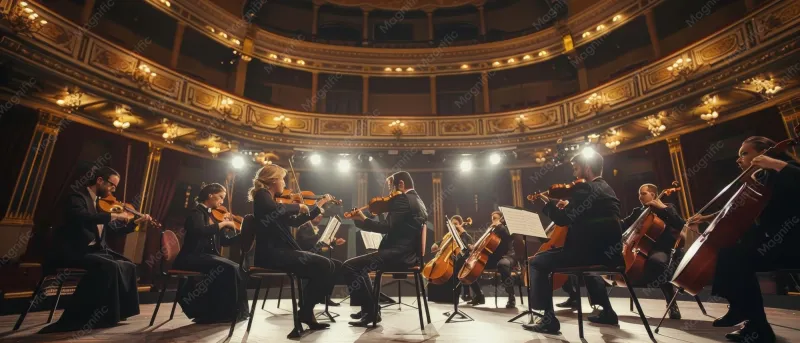
Photo: orchestra musicians performing in theatre pit dramatic lighting, via img.freepik.com
There is a moment — familiar to any regular patron of the Fox Theatre — when the house lights dim and a hush falls over the ornate auditorium. Before a single performer steps into the spotlight, before the first word of dialogue is spoken or sung, the orchestra begins. That sound, warm and immediate and irreducibly human, does something no recording can replicate: it tells the audience that what is about to unfold is real, shared, and alive.
The musicians who produce that sound occupy one of the most storied and least-examined roles in the Detroit theatrical tradition. Positioned in the orchestra pit — a sunken, dimly lit space that places them simultaneously at the heart of the performance and out of the audience's direct sightline — they function as the emotional infrastructure of every production that graces the Fox stage.
A Craft Defined by Adaptability
For a working musician at the Fox Theatre, no two productions are alike. A touring Broadway musical demands an entirely different sensibility than a visiting symphony orchestra or a classic film accompanied by live score. The ability to shift between these contexts — often with limited rehearsal time and under considerable pressure — defines what it means to perform in this space.
"Every show asks something different of you," explains one veteran pit musician who has performed at the Fox across more than two decades of productions. "You might spend one week playing lush, romantic ballads for a classic musical, and the next week you're navigating complex contemporary arrangements for something brand new. The venue doesn't change, but your entire musical identity has to."
This adaptability extends beyond repertoire. Conductors who lead ensembles at the Fox must develop an almost telepathic relationship with performers on the stage above them, adjusting tempo in real time to accommodate a singer's phrasing, a dancer's breath, or an unexpected dramatic pause. The orchestra pit at the Fox is not a separate entity — it is in constant, wordless conversation with everything happening in the light above it.
The Acoustic Particulars of a Historic Venue
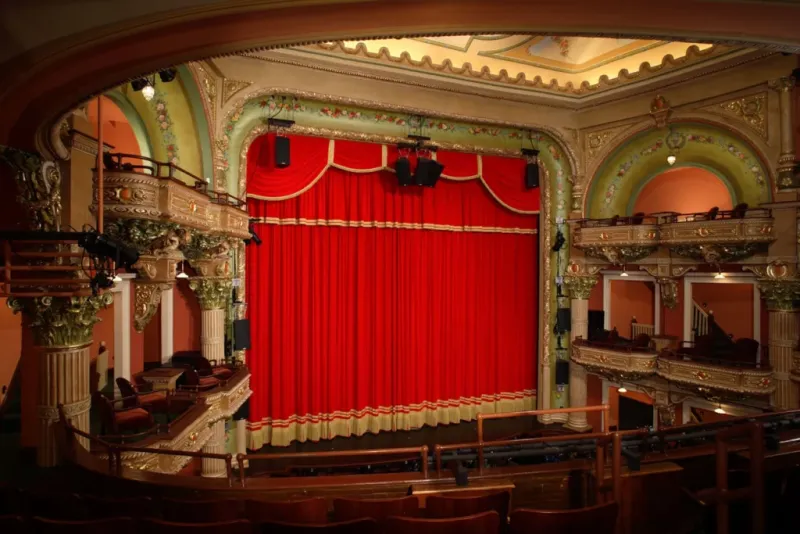
Performing inside a building as architecturally distinctive as the Fox Theatre presents technical challenges that musicians at more modern venues simply do not encounter. Designed by architect C. Howard Crane and opened in 1928, the Fox was built during an era when acoustic engineering relied on physical form rather than electronic amplification. Its soaring ceilings, ornate plasterwork, and vast seating capacity create a sonic environment that rewards careful listening but demands careful playing.
"The room has its own voice," says one conductor who has worked with multiple touring productions at the Fox. "You learn to play with it rather than against it. Certain frequencies carry beautifully — strings bloom in a way that you don't always get in newer halls. But you have to be precise. The room will expose imprecision in ways that a more acoustically neutral space might forgive."
Modern sound reinforcement systems have been integrated into the Fox in ways that preserve its historic character while meeting the technical requirements of contemporary touring productions. Still, musicians emphasize that the relationship between live performance and the room's natural acoustics remains central to the experience. The best moments, they suggest, occur when technology and architecture work together rather than in opposition.
Why Live Music Cannot Be Replaced
The economics of theatrical production have, over recent decades, pushed many venues toward pre-recorded orchestral tracks. The cost of hiring and rehearsing a full ensemble for every production is substantial, and digital playback technology has grown sophisticated enough that audiences in some contexts may not immediately notice the difference. The Fox Theatre has consistently resisted this trend — a position its musical staff regards not merely as a practical preference but as a philosophical commitment.
"A recording is a fixed object," one musician observes. "It was perfect on the day it was made, in a studio, under controlled conditions. But theatre is not a controlled condition. Theatre breathes. When a performer is having an extraordinary night, when the audience is particularly responsive, when something unexpected and wonderful happens on stage — a live orchestra can respond to that. We can lean into it. A recording cannot."
This responsiveness, musicians argue, is what elevates a theatrical performance from a polished presentation into a genuine event. The knowledge that every note being played is being played now, by a human being who is listening and feeling and reacting, creates a layer of tension and possibility that pre-recorded accompaniment structurally cannot offer.
Building Detroit's Musical Community
The Fox Theatre's commitment to live music extends beyond the pit itself. For generations of Detroit-area musicians, performing at the Fox has represented a career milestone — a connection to the city's broader cultural identity at one of its most prestigious and beloved institutions. Local players frequently join touring productions that require supplemental ensemble members, creating an ongoing relationship between the Fox and the regional musical community.
This relationship carries weight beyond individual careers. Detroit has a rich and complex musical heritage — from Motown to the classical traditions of the Detroit Symphony Orchestra — and the Fox Theatre exists within that heritage as a space where multiple musical worlds intersect. A musician who has played jazz clubs on the east side might find themselves in the Fox pit accompanying a Broadway production one season and a celebrated touring artist the next. The venue, in this sense, functions as a kind of common ground.
"Detroit audiences know music," says one conductor. "They have been raised on it. When you play here, you feel that. There is an attentiveness in the room that keeps you honest."
The Moment the Music Begins
For all the technical complexity, the long rehearsals, the acoustic negotiations, and the logistical demands of preparing a live ensemble for a major production, musicians at the Fox Theatre tend to describe their work in terms that are strikingly personal. They speak of the particular silence before the downbeat, the sensation of sound filling the auditorium, the way a perfectly placed musical phrase can shift an audience's emotional state in a single measure.
These are not incidental pleasures. They are, according to the musicians themselves, the reason the work matters — and the reason live orchestral accompaniment at a venue like the Fox Theatre remains not merely a tradition worth preserving, but an experience worth seeking out.
The spotlight may illuminate the performers on stage. But in the pit below, in the careful, practiced hands of musicians who have devoted their lives to this craft, the emotional architecture of every Fox Theatre performance takes its essential shape.