From Our Stage to the National Spotlight: The Artists the Fox Theatre Helped Define
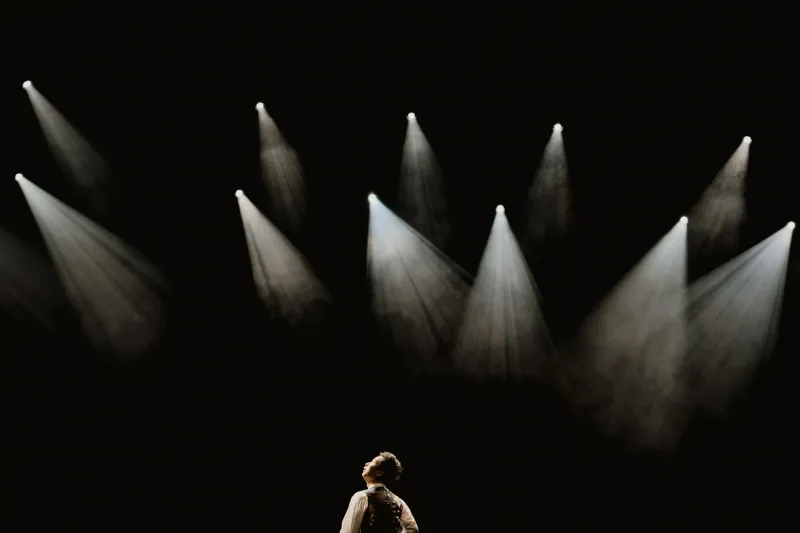
There is a particular quality to the silence that falls over the Fox Theatre in the moments before a performance begins. The house lights dim across 5,048 seats. The gilded Indo-Persian arches recede into shadow. And somewhere backstage, an artist—perhaps a local comedian making her largest-venue debut, perhaps a Broadway understudy finally handed his night—absorbs the weight of a room that has held Ella Fitzgerald, Luciano Pavarotti, and Prince within its walls.
That weight, according to performers who have experienced it firsthand, does not crush. It clarifies.
"You either discover what you're made of, or you discover what you still need to become," said Marcus Tillman, a Detroit-born jazz pianist who performed at the Fox in 2019 as part of a regional arts showcase. Within eighteen months of that engagement, Tillman had signed with a Chicago-based label and was touring nationally. He credits the Fox not with making him a better musician, but with making him a more serious one. "The room demands your full self. You can't phone it in. And once you've given everything to five thousand people, you realize you've been holding back everywhere else."
His experience is not singular. It is, in fact, a pattern.
The Architecture of Ambition
The Fox Theatre was designed in 1928 by architect C. Howard Crane to inspire awe in audiences. What Crane may not have anticipated is how thoroughly that awe reverberates backstage. The venue's sheer scale—its soaring ceiling, its ornate lobbies, its layered balconies—creates an environment in which performing feels consequential in a way that smaller venues, however intimate and beloved, simply cannot replicate.
Industry professionals have long understood this. Talent scouts, booking agents, and label representatives regularly attend Fox Theatre engagements, drawn by the venue's reputation for presenting artists at critical junctures in their careers. A strong night at the Fox carries a credibility signal that travels.
"When someone tells me they headlined the Fox, I listen differently," said one Nashville-based talent manager who has worked with multiple artists who performed in Detroit. "It's a room that doesn't flatter mediocrity. If you can hold that audience, you can hold any audience."
The Understudy Who Became the Story
In the touring production ecosystem, the Fox Theatre has earned a specific reputation: it is the house where understudies become legends. The venue's demanding acoustic environment and its audiences—known for their discernment and their generosity in equal measure—create conditions in which a performer stepping in for an absent principal can, on the right night, redefine the arc of an entire production.
Amara Collins had performed in the ensemble of a national Broadway tour for fourteen months before she stepped into the lead role during a Fox Theatre engagement. The circumstances were abrupt—a last-minute illness, a forty-minute notice, a costume that required emergency alterations. What followed, by multiple accounts from crew and audience members alike, was one of the more remarkable individual performances the Fox stage had witnessed in recent memory.
"I didn't have time to be frightened," Collins recalled. "By the time the fear would have arrived, I was already in the first scene." She received a standing ovation. Within three weeks, she had been offered a principal contract for a separate production. She now headlines her own touring show.
Her story circulates among working performers the way certain stories always do in theatrical communities—not as mythology, but as evidence. The Fox, they say, has a way of meeting you at the precise moment you are ready to exceed yourself.
Comedy, Credibility, and the Detroit Audience
The trajectory effect is not confined to musical or theatrical performers. Stand-up comedians who have worked the Fox Theatre as opening acts or as part of multi-artist showcases describe the experience in strikingly similar terms: the Detroit audience is sophisticated, it is not easily impressed, and earning its full engagement is a professional credential unlike any other.
Deandre Washington, a Detroit-native comedian who opened for a national touring act at the Fox several years ago, describes the experience as the moment his career shifted from promising to purposeful. "Detroit audiences have seen everything. They're not there to be polite. So when they're with you—really with you—you know it's real. You know you've actually done something."
Washington has since appeared on two national comedy specials and maintains a touring schedule that keeps him on the road for much of the year. He still lists the Fox engagement prominently in his professional biography.
What the Data Suggests
While the entertainment industry does not maintain a formal registry of career inflection points, an informal review of Fox Theatre programming records over the past three decades reveals a consistent pattern. Artists who performed at the Fox Theatre in emerging or transitional career phases—as openers, as understudies, as featured performers in ensemble productions—went on to national prominence at a rate that exceeds comparable regional venues by a notable margin.
The reasons are multiple and interconnected. The Fox's booking standards attract industry attention. Its audience size provides genuine market validation. Its physical and acoustic environment demands and develops performance craft. And its location in Detroit—a city with a storied cultural legacy and a fiercely loyal arts community—means that a strong Fox Theatre performance generates the kind of word-of-mouth that travels with authority.
None of this is accidental. It is the cumulative result of nearly a century of institutional commitment to presenting artists at the highest possible standard.
The Pressure as Privilege
Perhaps the most consistent thread running through conversations with artists who have performed at the Fox is their reframing of pressure. What might, in another context, be described as anxiety is here understood as information—a signal that the stakes are real, that the audience is genuine, that the moment matters.
"I've performed in a lot of rooms," said Tillman, the jazz pianist. "The Fox is the only one where I felt the room actually needed something from me. Not applause, not approval—something real. And giving that, and having it received, changes what you think you're capable of."
For the Fox Theatre, this is not merely a pleasant observation about artistic development. It is the continuation of a mission that has defined this institution since its earliest days: to provide Detroit—and the artists who call this city home or pass through its stages—with a space where culture is taken seriously, where excellence is expected, and where the distance between aspiration and achievement is measured in nothing more than one extraordinary night.
The stage is set. It has always been waiting.