Wired for Wonder: The Science Behind Why the Fox Theatre Never Leaves You

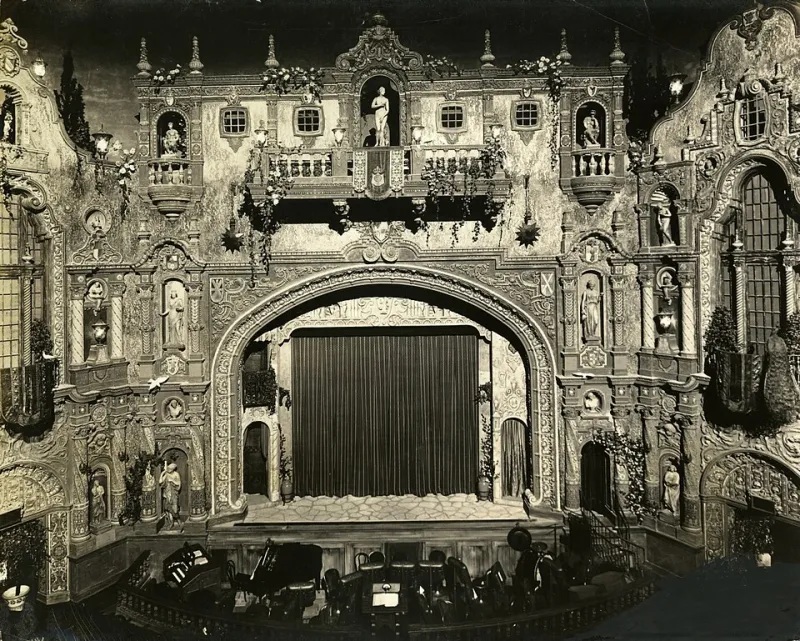
Photo: JGKlein, Public domain, via Wikimedia Commons
Ask anyone who has attended a performance at the Fox Theatre in Detroit to describe the experience, and something curious happens. They do not begin with the show itself. They begin with the lobby.
They describe the smell—a particular mingling of old wood, faint floral arrangements, and something vaguely ceremonial, like a cathedral before a service. They describe the sensation of stepping from the ordinary world of Woodward Avenue into a space that operates by entirely different rules. And then, almost without exception, they pause. The memory, it seems, is so layered that language struggles to contain it.
This is not coincidence. It is neuroscience.
The Architecture of Memory
Human memory does not function like a video recording. It is selective, emotionally weighted, and deeply tied to sensory experience. Researchers in the field of episodic memory—the kind that stores personally experienced events—have long understood that moments marked by novelty, emotional intensity, and multi-sensory richness are encoded with unusual depth. The brain, in essence, flags certain experiences as significant and commits them to long-term storage with a fidelity that more mundane moments simply do not receive.
The Fox Theatre, opened in 1928 and restored to its full grandeur in 1988, satisfies nearly every condition neuroscientists associate with powerful memory formation. Its Siamese-Byzantine interior—a term that barely does justice to the riot of carved plasterwork, hand-painted ceilings, elephant-flanked proscenium arches, and layered gilt—presents the brain with a volume of visual information that is genuinely overwhelming in the most productive sense. Novel environments trigger the hippocampus, the brain's primary memory-consolidation structure, to heighten its activity. A first visit to the Fox Theatre is, neurologically speaking, an event.
But novelty alone does not explain the depth of recall that patrons report years and even decades later. For that, one must consider the role of emotion.
When Emotion Becomes the Archivist
The amygdala, a small almond-shaped structure nestled within the brain's temporal lobe, acts as a kind of emotional amplifier for memory. When an experience carries significant emotional weight—joy, awe, anticipation, even the pleasant anxiety of a darkened theater moments before a curtain rises—the amygdala signals the hippocampus to encode that moment with particular care. Psychologists refer to this process as emotional memory consolidation, and it is why people can recall the precise details of a wedding, a graduation, or a first concert decades after the fact.
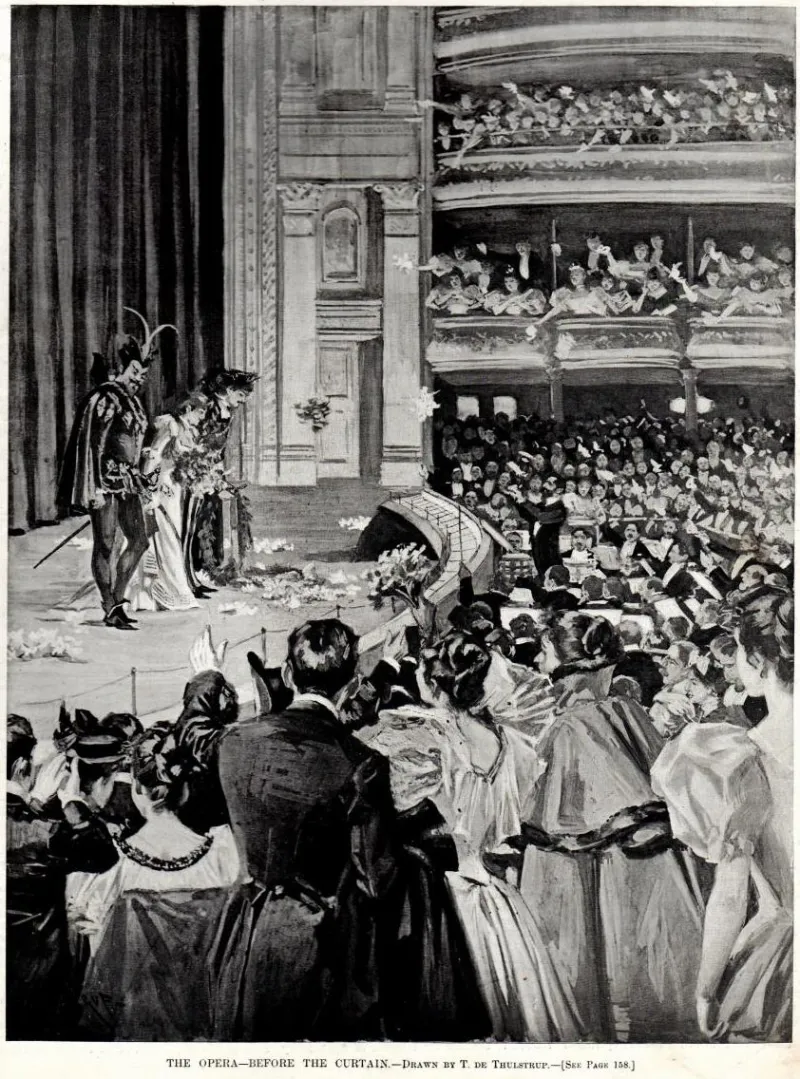
The Fox Theatre is, by its very nature, an emotion-generating environment. Consider the moment the house lights begin their slow descent. In a modern arena or multiplex, this transition is perfunctory—a functional signal that the program is beginning. At the Fox, the dimming of lights within a space of such ornate complexity produces a qualitatively different effect. Shadows gather in the carved recesses of the ceiling. The golden fixtures soften. The audience, drawn together by darkness, becomes a single organism of anticipation. The brain registers this as significant. The amygdala takes note.
The Details That Anchor Us
Memory researchers have identified what they call "anchor points"—specific sensory details that serve as retrieval cues for broader experiential memories. A single smell, a particular texture, or an unexpected moment of human connection can unlock a cascade of associated recollections. The Fox Theatre produces these anchor points with remarkable consistency.
The velvet of the seating, for instance, carries a tactile specificity that synthetic materials simply cannot replicate. The slight resistance of the armrest, the way the fabric catches light differently depending on the angle—these are details the brain catalogs because they are unusual within the context of contemporary life. Most people do not regularly encounter genuine velvet in their daily routines. Its presence at the Fox marks the experience as categorically different from the ordinary.
Then there is the matter of eye contact. In large modern venues, the distance between performer and audience is vast enough that individual human connection is effectively impossible. At the Fox, the intimacy of the hall—its sight lines carefully preserved through the 1988 restoration—means that a performer's gaze can, at moments, feel directed at a single person in the crowd. This is not an illusion. The theater's dimensions allow it. And when that eye contact occurs, however briefly, the brain responds as it would to any significant interpersonal moment: it remembers.
Smell, Sound, and the Limbic Highway
Of all the senses, smell is most directly connected to the limbic system—the brain's emotional and memory center. Unlike visual or auditory information, which is processed through relay stations before reaching emotional centers, olfactory signals travel an almost direct route to the amygdala and hippocampus. This is why a particular scent can produce a memory so vivid it feels less like recollection and more like reliving.
The Fox Theatre has a smell. Long-time patrons will recognize it immediately: a composite of age, maintenance, occasion, and something ineffable that belongs only to spaces that have absorbed a century of human gathering. It is not manufactured. It cannot be replicated. And for anyone who has experienced it, it functions as one of the most reliable memory triggers the theater possesses.
The acoustic environment contributes its own form of imprinting. The Fox's sound design—refined over decades of performance and restoration—produces a listening experience that feels physically enveloping. Live music in this space does not simply enter through the ears. It registers in the chest, in the spine, in the particular alertness that the body adopts when it recognizes something remarkable is occurring. These physical sensations, intertwined with the emotional content of the performance itself, create what memory scientists might call a "somatic memory"—one stored not only in the mind but in the body's own record of experience.
Why Modern Venues Cannot Compete
This is not a dismissal of contemporary performance spaces, many of which are marvels of engineering and acoustical science. It is, rather, an acknowledgment that the Fox Theatre operates according to a different logic—one that was not designed with neuroscience in mind but that aligns with it with uncanny precision.
Modern venues optimize for capacity, sightlines, and operational efficiency. They are designed to be functional, and they succeed on those terms. But functionality does not produce memory the way that beauty does. Efficiency does not generate awe. And it is awe—that particular cognitive state in which the brain recognizes something that exceeds its ordinary categories—that the Fox Theatre reliably produces.
Researchers who study the psychology of awe have found that it produces measurable effects on perception: time appears to slow, self-consciousness diminishes, and the individual feels a heightened sense of connection to something larger than themselves. These are not merely pleasant sensations. They are the precise conditions under which the brain forms its most enduring memories.
The Memory You Carry Home
Every night at the Fox Theatre ends the same way: the house lights return, the applause fades, and patrons make their way back through the lobby and out onto Woodward Avenue, where Detroit's streets receive them as they always have. But something has changed.
The experience has been filed. The brain has done its work—cataloging the smell of the lobby, the weight of the velvet seat, the moment the lights fell and the curtain rose, the sound that seemed to come from everywhere at once. These details will resurface unexpectedly: triggered by a particular piece of music heard on a car radio, by the smell of something vaguely ceremonial, by the sight of ornate plasterwork in an entirely different city.
This is the Fox Theatre's most durable achievement. Not simply to entertain, but to become part of the permanent record of a life—woven into the neural fabric of everyone who has ever sat within its walls and allowed themselves, even briefly, to be astonished.