Patterns in the Applause: What Detroit's Loyalty Reveals About the Fox Theatre's Enduring Appeal
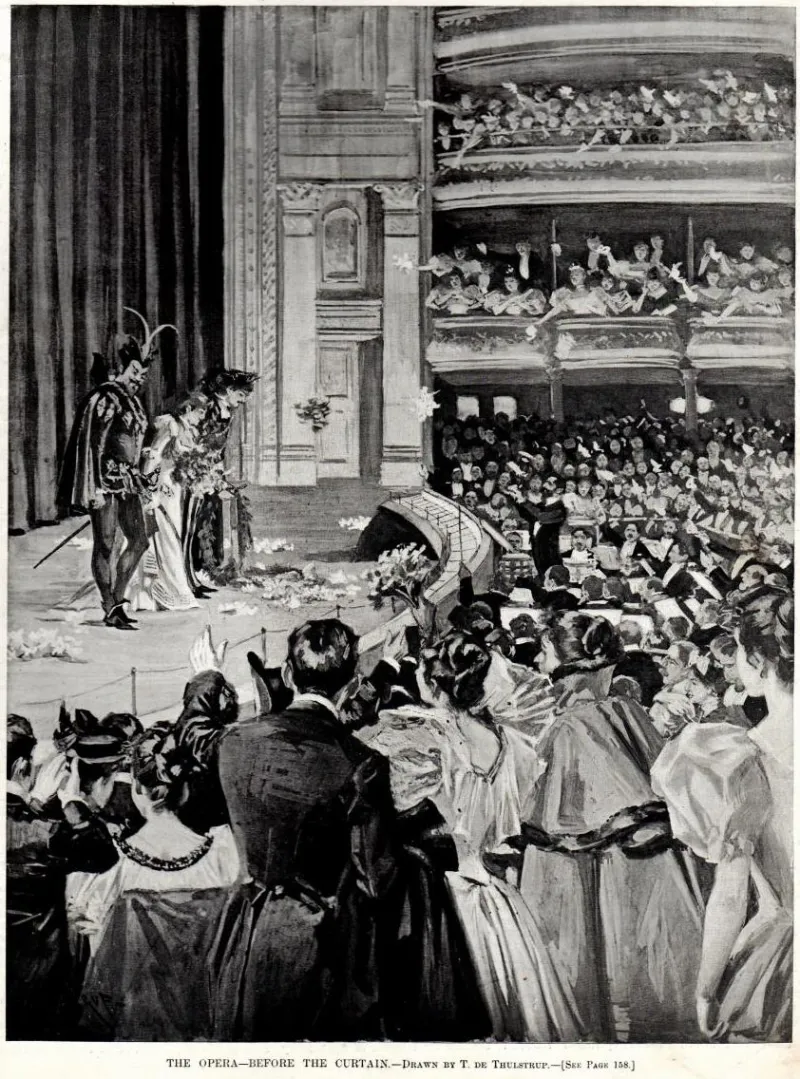
Photo: Thure de Thulstrup, Public domain, via Wikimedia Commons
There is a particular kind of silence that falls over the Fox Theatre in the moments before a performance begins — a collective holding of breath that belongs equally to first-time visitors and those who have occupied the same seat for the third or fourth time. It is in that second group, the repeat attendees, where the most revealing data about Detroit's cultural life is quietly stored.
Audience loyalty is not a sentimental abstraction. It is a measurable phenomenon, and at the Fox Theatre, it paints a vivid portrait of what this city values, what it celebrates, and what it refuses to let go.
The Return Visitor and What They Tell Us
Not every memorable night at the Fox Theatre translates into a return visit. A performance can be extraordinary without compelling an audience member to seek it out again — or to arrive early for the next comparable engagement. The distinction matters. Repeat attendance represents something more deliberate than casual enjoyment. It signals investment.
Box office patterns across multiple seasons reveal that certain genres consistently generate disproportionate return traffic. Broadway touring productions, particularly those drawn from the canon of classic American musicals, account for a significant share of multi-visit audience behavior. Productions rooted in familiar storytelling — whether through beloved scores or narratives that have accumulated cultural weight over generations — tend to attract guests who saw earlier productions of the same title elsewhere and arrive at the Fox Theatre eager to measure the experience against memory.
This phenomenon is not unique to Detroit, but the degree to which it holds here is notable. Detroit audiences demonstrate a pronounced affinity for theatrical experiences they can contextualize within their own lives — shows that speak to themes of perseverance, community, and reinvention. It is difficult to ignore how closely those themes mirror the city's own story.
Musical Acts and the Phenomenon of the Perennial Return
Beyond Broadway, the Fox Theatre's concert programming offers its own set of instructive patterns. Certain artists have become fixtures on the venue's calendar precisely because their Detroit audiences do not merely attend — they return season after season with the reliability of ritual.
Legacy artists with deep roots in American popular music consistently rank among the highest performers in terms of repeat ticket purchases. The connection Detroit audiences feel to artists who emerged from or were shaped by the Motown era is not nostalgia in any simple sense. It is a form of cultural custodianship. When a celebrated soul or R&B performer takes the Fox Theatre stage, the audience that fills those seats often includes multiple generations of the same family — a grandmother who first heard that voice on a car radio, a grandchild encountering it live for the first time.
This intergenerational dimension is one of the more striking features of the venue's repeat-attendance data. It suggests that the Fox Theatre functions not merely as a destination for individual enjoyment but as a shared inheritance, passed deliberately from one generation to the next.
Holiday Programming and the Architecture of Tradition
Few programming categories rival holiday productions in their capacity to generate annual return visits. The Fox Theatre's seasonal offerings — from elaborate Christmas spectaculars to New Year's Eve events — occupy a distinct psychological space in the audience's calendar. These are not simply shows. They are anchors.
For many Detroit families, a December visit to the Fox Theatre is as fixed a tradition as any other seasonal observance. The consistency of that behavior speaks to something the venue has cultivated with considerable care: the sense that attending the Fox Theatre is itself a meaningful act, independent of whichever production happens to be on stage that evening.
This is, in many respects, the highest form of institutional loyalty. When an audience member returns not solely because of a specific performer or title but because the venue itself has become part of how they mark time, the Fox Theatre has achieved something that transcends conventional entertainment programming.
Standing Ovations as Data Points
Standing ovations are frequently treated as spontaneous expressions of enthusiasm, and in one sense they are. But examined in aggregate, they reveal consistent patterns. Productions that receive standing ovations at the Fox Theatre tend to share certain qualities: emotional directness, technical ambition, and a connection — however oblique — to the human experience of striving against difficulty.
Detroit audiences are not easily moved by spectacle alone. The venue's history of extraordinary productions has calibrated its audience to expect both visual grandeur and genuine emotional substance. When a performance delivers both, the response is unmistakable. When it delivers only one, the applause is warm but the ovation is withheld.
This discernment is itself a form of cultural sophistication, and it is one of the reasons that artists and production companies regard a strong reception at the Fox Theatre as a meaningful measure of quality. To earn a standing ovation in Detroit is to have satisfied an audience that has seen a great deal and expects more.
What the Numbers Ultimately Suggest
The accumulated evidence of audience behavior at the Fox Theatre points toward a conclusion that is both straightforward and profound: Detroit audiences return because the Fox Theatre consistently delivers experiences that feel consequential. Not merely entertaining, not simply impressive, but genuinely significant.
This is a distinction the venue has earned over decades of programming that takes its audience seriously — that treats each season's lineup as a conversation with a community rather than a transaction with a consumer base. The repeat visitor, the multi-generational family, the annual holiday attendee — each represents a different expression of the same underlying truth.
The Fox Theatre is not simply a place where performances happen. It is a place where Detroit's cultural life is actively shaped, preserved, and renewed. The audiences who keep returning understand this, even if they would not articulate it in precisely those terms. They return because something essential is waiting for them here — something that, like the gilded ceilings above them, was built to last.