Before the First Note: Inside the Fox Theatre's Final Hours of Preparation
Photo: Rowan Kempf, CC BY-SA 4.0, via Wikimedia Commons
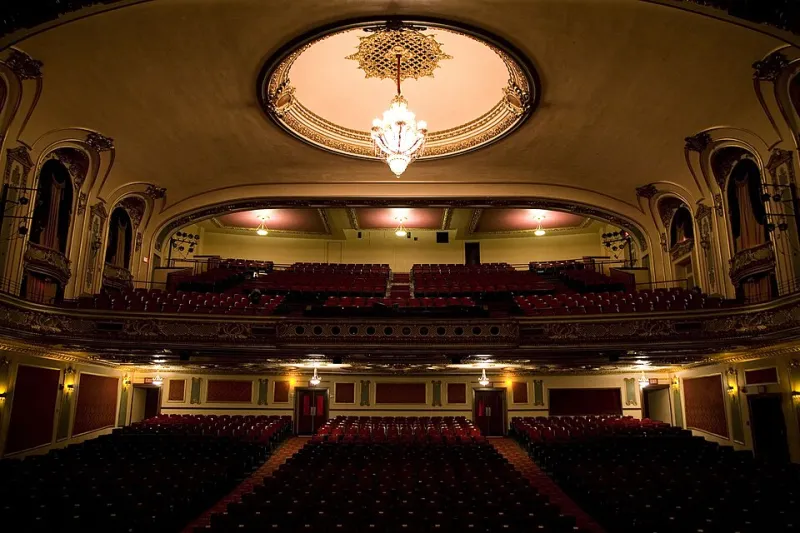
The Fox Theatre's grand lobby is still and unhurried in the early afternoon. Chandeliers cast their amber warmth across the terrazzo floors, and the scent of old velvet and polished brass lingers in the air like a memory. Within hours, nearly five thousand guests will fill every tier and balcony. But right now, the theatre belongs to a different cast entirely — one that works without applause.
For those who have devoted their careers to this institution, the hours between midday and curtain are not a prologue. They are the performance itself.
The Sound Engineer's Cathedral
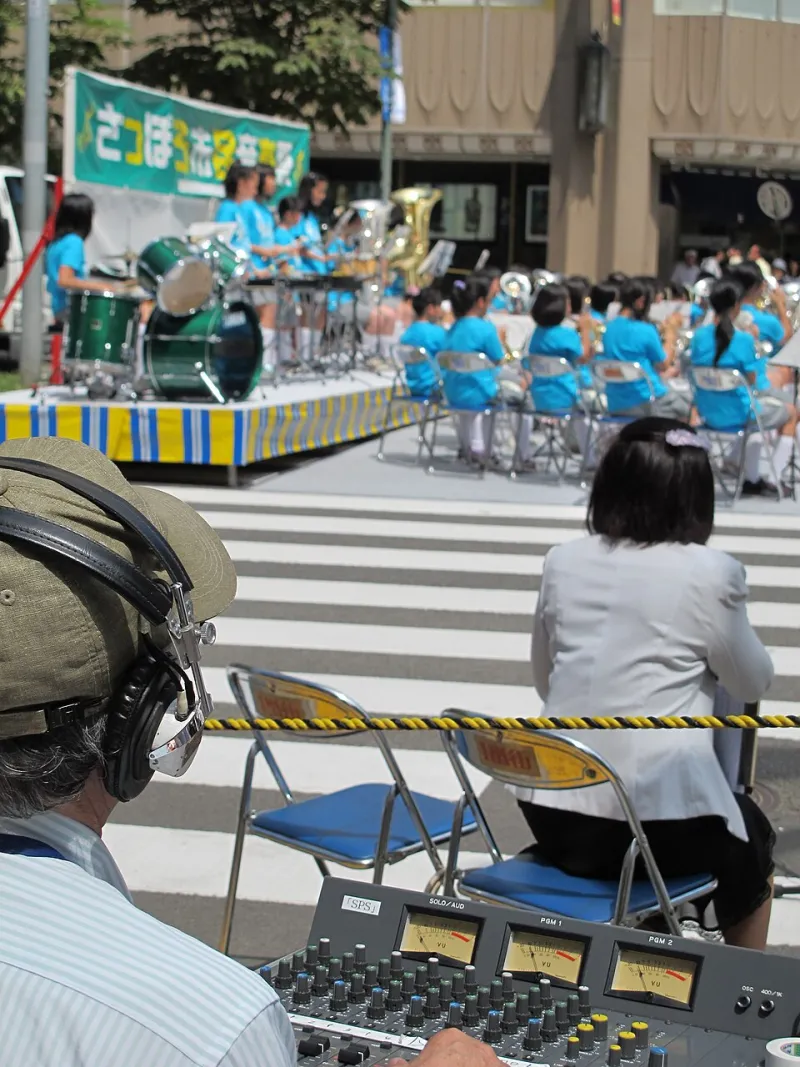
Deep within the auditorium, positioned at the primary mixing console roughly two-thirds of the way toward the back of the main floor, sound engineers begin what they describe as a kind of daily conversation with the building. The Fox Theatre's acoustics are famously complex — a consequence of its soaring Siamese-Byzantine interior, its layered balconies, and the sheer volume of its airspace. Every touring production arrives with its own sound design, its own rider, and its own expectations. Reconciling those expectations with the theatre's singular acoustic personality is where the real artistry begins.
"No two shows set up the same way," explains one veteran engineer who has worked the Fox's sound board across hundreds of productions. "The room has its own character. You learn to work with it, not against it."
The afternoon sound check is far more than a technical formality. Engineers walk the entire house — from the front-row orchestra seats to the uppermost reaches of the mezzanine — listening for reflections, dead zones, and the subtle acoustic shifts that occur when a room transitions from empty to full. Microphone placements are adjusted by fractions of an inch. Speaker delay times are recalibrated. Every element of the system is tested against the specific demands of that evening's program.
What makes this process particularly distinctive at the Fox is the coexistence of legacy infrastructure and contemporary digital equipment. Systems installed during the theatre's landmark 1988 restoration still function alongside state-of-the-art digital consoles and wireless transmission technology. Engineers describe a kind of institutional memory embedded in the building's wiring — a familiarity that rewards experience and punishes shortcuts.
The Stage Manager's Choreography
If sound engineers are in conversation with the room, stage managers are conducting an orchestra of human coordination. The afternoon belongs to them in a way that few outsiders appreciate. Production schedules, load-in completion reports, dressing room assignments, and communication checks with touring production teams all converge in the stage manager's headset during those final hours.
At the Fox, where touring Broadway productions, major concert acts, and special events rotate through with remarkable frequency, no two production configurations are identical. The stage — one of the largest in the Midwest — must be dressed, lit, and tested for whatever demands the evening's show places upon it. Fly systems are checked. Trap doors, where applicable, are inspected. Every piece of set dressing that moves, drops, or rises is rehearsed at least once, often multiple times.
"The audience sees a seamless show," one longtime Fox stage manager noted during a recent production week. "What they don't see is the thirty conversations that had to happen before the first guest walked through the door."
Communication is the stage manager's primary instrument. Headsets link the stage manager to lighting operators, fly crew, sound engineers, front-of-house staff, and the touring company's own production team. A language of cues — numerical, verbal, and gestural — is established and rehearsed before any audience member arrives. When a cue is called during a live performance, it is never the first time that instruction has been given.
The Performers' Ritual
For the artists themselves, the Fox Theatre's backstage environment carries a particular weight. To stand in the wings of a theatre that has hosted Ella Fitzgerald, Luciano Pavarotti, and countless Broadway legends is to feel the accumulated history of American performance culture pressing gently against the present moment.
Many touring performers speak of a distinct quality to their Fox Theatre sound checks — a sense that the room is listening back. The auditorium's scale demands projection and presence in ways that smaller venues do not. Vocalists adjust their warm-up routines accordingly. Instrumentalists spend additional time calibrating their monitor mixes, ensuring that what they hear onstage reflects the fullness of the room rather than the thinness of an empty house.
For Broadway productions, the afternoon typically includes a protagonist walk — a quiet, deliberate stroll through the full performance space by lead performers and their directors. Sightlines are confirmed. Blocking is reviewed in the context of this specific stage. Sight gags that work in one theatre may require adjustment in another. The Fox's proscenium width and depth introduce variables that demand attention even from the most experienced touring companies.
When Technology Meets Tradition
One of the more remarkable aspects of the Fox Theatre's pre-show preparation is the degree to which modern technology has been integrated without displacing the building's historic character. Digital lighting consoles now govern a rig that illuminates the theatre's famously intricate interior — its carved grotesques, gilded reliefs, and painted ceiling panels — but the fixtures themselves are chosen and positioned with preservation in mind. Light that flatters a performer must not overwhelm the architectural details that define the space.
Similarly, the introduction of wireless microphone systems, digital audio networking, and advanced projection equipment has been managed in a way that respects the theatre's original design intent. Conduit runs are concealed. Equipment is positioned to avoid compromising the audience's visual relationship with the stage. Every technological addition is, in a sense, a negotiation between the demands of contemporary performance and the integrity of a nearly century-old building.
The Final Hour
As the clock approaches curtain, the tempo of the Fox Theatre's backstage world accelerates almost imperceptibly. Headset chatter increases. Front-of-house staff take their positions. House lights are tested one final time. The stage manager issues the traditional half-hour call, then the fifteen-minute call, then the five-minute warning that signals the end of preparation and the beginning of performance.
In those last quiet minutes, the theatre holds its breath. The engineers are at their consoles. The crew is at their posts. The performers are gathered in the wings. And somewhere in the ornate lobby, the first guests are beginning to arrive — unaware of the extraordinary precision that has transformed this magnificent building, once again, into the stage that Detroit calls its own.
The curtain rises. The work, as always, disappears into the art.