The Seat You Choose Changes Everything: A Guide to Experiencing the Fox Theatre from Every Angle
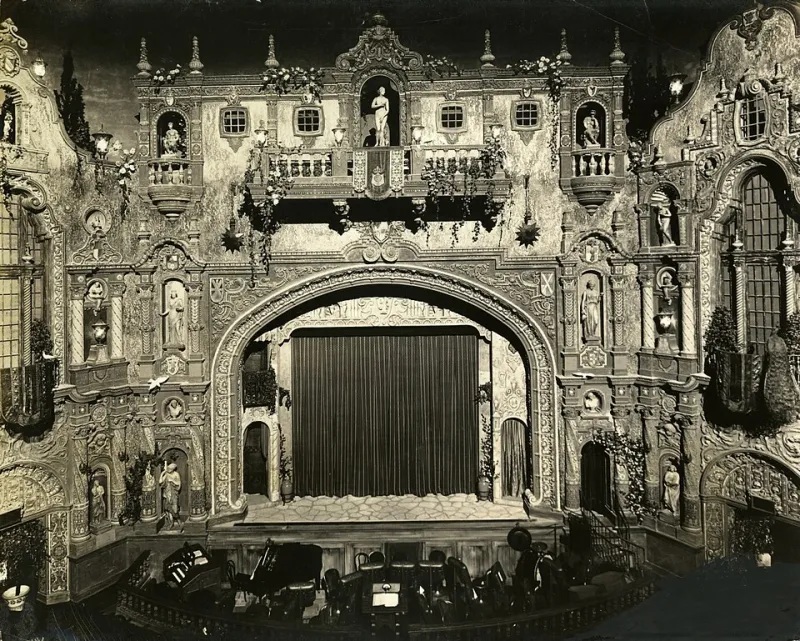
Photo: Stetson Kennedy, Public domain, via Wikimedia Commons
At the Fox Theatre, the seat you occupy is more than a number on a ticket — it is the lens through which an entire performance comes into focus. From the sweeping panorama of the upper balcony to the visceral immediacy of the front orchestra, each section of this historic house offers a profoundly different emotional and artistic encounter. Whether you are planning your first visit or your fiftieth, understanding how vantage point shapes experience may be the most valuable piece of knowledge you carry through our doors.
More Than Architecture: The Theatre as a Living Instrument
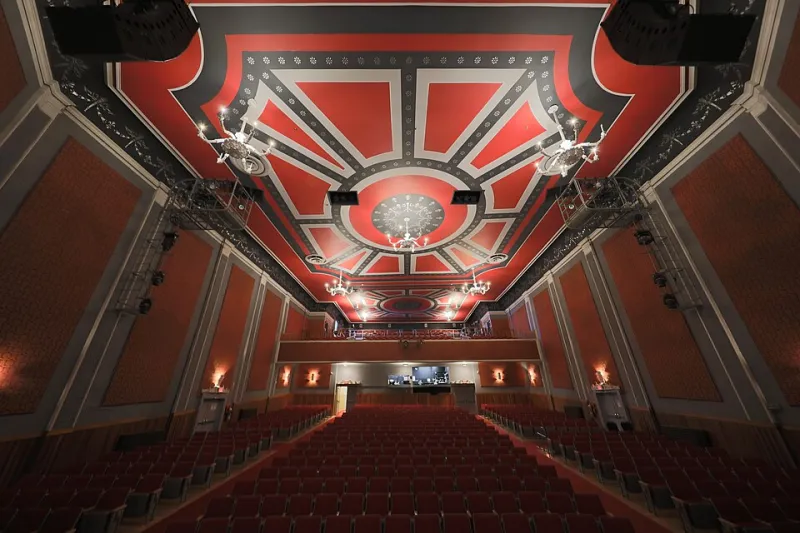
The Fox Theatre was designed in 1928 by architect C. Howard Crane, and every curve, column, and tier of its interior was conceived with intention. The building is not simply a container for performance — it is, in many respects, a participant in it. The soaring Siamese-Byzantine ceiling, the gilded ornamental details, and the carefully raked seating sections all work in concert to create an environment where atmosphere is inseparable from artistry.
What many visitors do not initially appreciate is that this architectural intentionality extends to acoustics, sightlines, and even the psychological relationship between audience and performer. Where you sit determines not only what you see, but how deeply you feel it.
The Orchestra Level: Immersion at Its Most Immediate
For those who wish to feel the performance rather than simply observe it, the orchestra level — the main floor of the auditorium — offers an experience defined by proximity and presence. Seated here, patrons are physically closest to the stage, and the effect is considerable. The voices of performers carry with a warmth and directness that no amplification system alone can fully replicate. Facial expressions become readable. The chemistry between actors registers in real time.
Regular patrons who favor this section often describe a sense of being drawn into the world of the production rather than watching it from a remove. "There's a moment in a great show when you forget the theatre exists," noted one longtime Fox subscriber who has attended performances here for more than two decades. "That happens fastest for me when I'm in the orchestra. The stage feels like it belongs to all of us."
The front orchestra rows, in particular, carry an energy that is almost electric during musical productions, when the sound from the pit and the stage converges directly at ear level. Those who prefer a slightly more composed perspective within the orchestra section often gravitate toward the mid-orchestra rows, where sightlines are elevated enough to take in full staging while still retaining the sense of closeness that defines this level.
The Mezzanine: Where Balance Becomes an Art Form
For many experienced theatregoers, the mezzanine represents the sweet spot of the Fox Theatre's seating geography. Elevated above the orchestra but still intimate enough to preserve emotional connection, this section offers sightlines that many consider ideal for productions with complex staging, large ensemble numbers, or elaborate scenic design.
From the mezzanine, the full breadth of the stage is visible without the neck-craning that can sometimes accompany front orchestra seats. Choreography reads with particular clarity here — the geometry of a dance number, the precise blocking of a dramatic scene, the sweep of a set change all resolve into a coherent visual whole. Sound, too, arrives with a pleasing balance, benefiting from the theatre's natural acoustics in ways that reward attentive listening.
Usher veterans at the Fox — some of whom have guided audiences to their seats for years — consistently report that first-time visitors who ask for a recommendation are often directed toward the mezzanine. "It's where the theatre shows you everything it has," one usher explained. "You get the grandeur of the room and the detail of the stage at the same time."
The Balcony: Distance That Deepens Perspective
There exists a particular school of thought among devoted theatre patrons that holds the balcony in the highest regard — not despite its distance from the stage, but because of it. At the Fox Theatre, the upper balcony is among the most dramatically situated seating in any American performing arts venue, and the view it offers is genuinely unlike anything available on the lower levels.
From the balcony, the stage transforms into something approaching a painting. The full visual composition of a production — its lighting design, its scenic scope, its movement patterns — becomes legible in a way that proximity sometimes obscures. Productions with cinematic staging or large-scale visual effects often reveal their full ambition most clearly from this elevation.
The acoustic experience in the balcony carries its own character as well. Sound rises naturally in the Fox's vast auditorium, and many patrons report that vocal performances, in particular, take on an almost cathedral-like resonance when experienced from this height. For those attending operatic productions or large-scale Broadway musicals, the balcony can offer a listening experience of remarkable richness.
Performers themselves have occasionally remarked on the unique relationship they feel with the balcony audience. "You know they made a choice to be up there," one touring company actor observed following a recent engagement at the Fox. "There's a kind of commitment in that. When you see them lean forward, you feel it all the way down on the stage."
Choosing Your Seat: A Few Practical Considerations
For those approaching the Fox Theatre's seating chart for the first time, a handful of practical principles may help guide the decision.
The nature of the production matters. Plays that depend on nuanced dialogue and intimate dramatic performance often reward closer seating, where facial expression and vocal subtlety are most accessible. Large-scale musicals and spectacle-driven productions frequently reveal their full design from the mezzanine or balcony, where staging can be appreciated in its entirety.
Your relationship to sound is worth considering. Those who prioritize the physical sensation of live music — the resonance of an orchestra, the power of an amplified vocal — may find the orchestra level most satisfying. Those who prefer to experience sound as part of a larger architectural envelope often discover that the upper levels of the Fox offer a more enveloping auditory experience.
Returning visitors should consider experimenting. Many regular patrons of the Fox Theatre have settled into a preferred section and rarely deviate. There is genuine value, however, in periodically choosing a different part of the house. Productions that feel familiar can become revelatory when experienced from a new vantage point — a phenomenon that speaks to the Fox's extraordinary range as a performance environment.
The Fox Theatre as a Complete Experience
What distinguishes the Fox Theatre from many of its contemporaries is that no section of the house is an afterthought. Every seat was placed with care, every sightline considered, every acoustic relationship tested against the demands of live performance. The result is a venue in which the question of where to sit carries genuine creative weight.
There is no wrong answer to that question — only different answers, each of which opens a distinct door into the world the Fox Theatre exists to create. The invitation, extended to every visitor who walks through our historic doors, is to explore all of them.
For seating maps, accessibility information, and current programming, visit foxtheatredetroit.org.